What Is Web Summit?
Founded in Ireland in 2009 by Paddy Cosgrave and his team, Web Summit started as a relatively modest tech gathering in Dublin before rapidly becoming a global phenomenon.
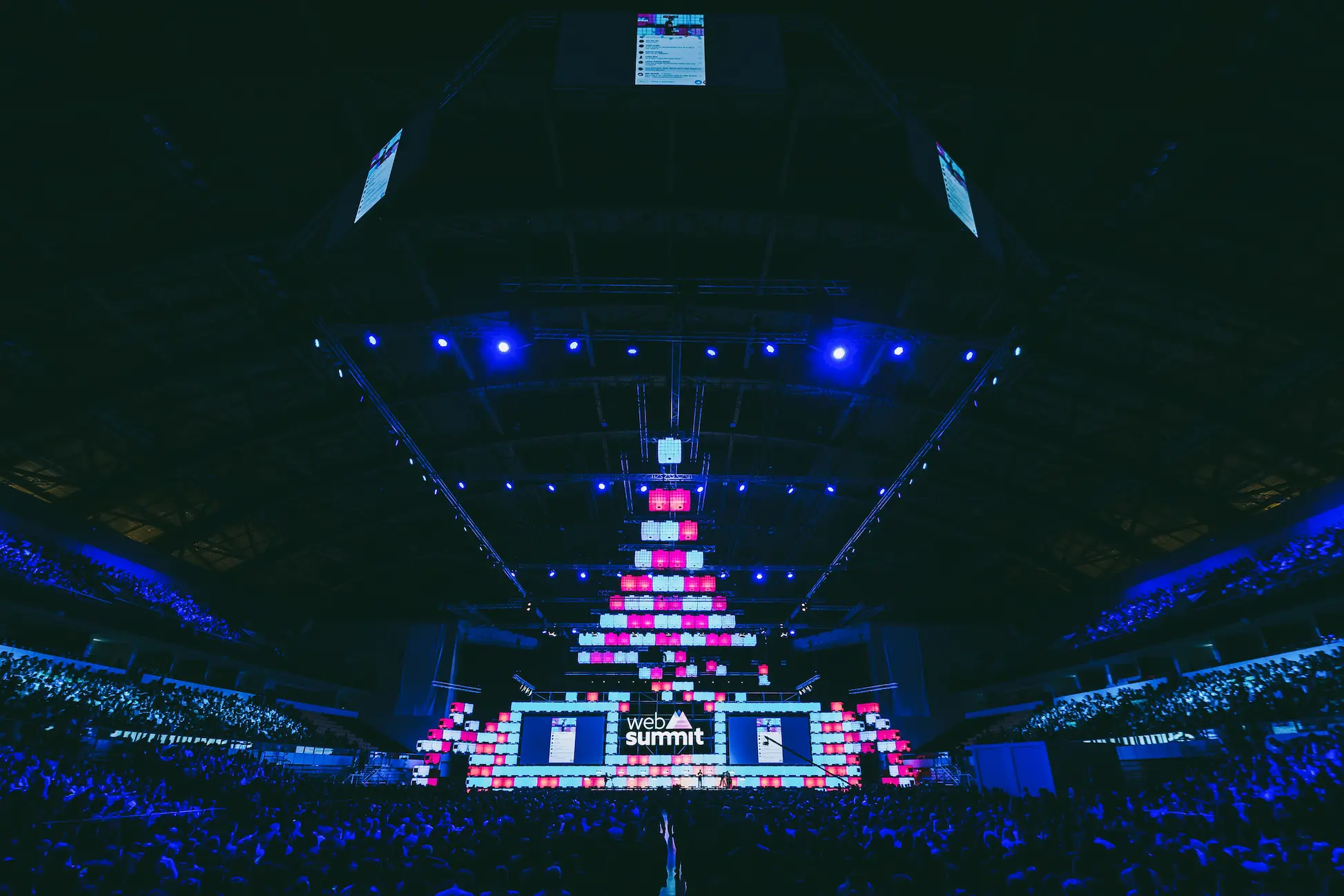
Today, it is often described as “the Olympics of tech conferences.” That comparison is not entirely exaggerated.
The event attracts:
- Startup founders looking for visibility or funding
- Major technology companies unveiling products or ideas
- Investors searching for the next billion-dollar company
- Journalists hunting for headlines
- Governments promoting innovation ecosystems
- Agencies and freelancers networking for opportunities
- Students and creators trying to understand the future
At Web Summit, conversations about AI, robotics, cybersecurity, climate tech, social media, gaming, marketing and digital culture happen simultaneously across dozens of stages.
One moment you might hear a CEO discussing the future of artificial intelligence. Ten minutes later, you are standing beside a startup demonstrating an AI-powered toothbrush or a humanoid robot awkwardly waving at attendees like a confused airport mascot.
That contrast is part of the charm.
Why Lisbon Became the Perfect Host
When Web Summit moved from Dublin to Lisbon in 2016, some people were skeptical. Portugal was not yet considered a major European tech hub.
A decade later, the move looks almost prophetic.
Lisbon offered several advantages:
- A warm climate
- Lower costs than London or Paris
- Strong international accessibility
- A growing startup ecosystem
- An attractive lifestyle for remote workers and entrepreneurs
The city also possessed something harder to quantify: atmosphere.
Lisbon feels simultaneously ancient and futuristic. You can walk past a 16th-century church while hearing conversations about machine learning infrastructure and crypto regulation in five different languages.
It gives Web Summit a cinematic backdrop. Silicon Valley energy wrapped in Atlantic light.
The district hosting the event, Parque das Nações, perfectly embodies that contrast.
Parque das Nações: Lisbon’s Futuristic Playground
Unlike Lisbon’s older neighborhoods filled with narrow streets and historic buildings, Parque das Nações feels modern, spacious and almost sci-fi by Portuguese standards.
Built for Expo ’98, the area was transformed from former industrial land into one of Lisbon’s most contemporary districts. Wide promenades stretch along the Tagus River. Glass buildings reflect the sky. Cable cars float above palm-lined walkways.
During Web Summit, this neighborhood becomes the event’s beating heart.
Badge-wearing attendees flood cafés, restaurants and hotel lobbies. Conversations about funding rounds and AI models happen beside riverside sunsets and late-night beers.
It is both a conference venue and a temporary city within the city.
And if you attend Web Summit, exploring Parque das Nações is almost mandatory.
So here’s a practical guide: The 5 Best Things To Do in Parque das Nações
The Real Purpose of Web Summit
Despite all the stages and flashy presentations, the real engine of Web Summit is networking.
This can sound intimidating or superficial, but networking at the event is less about aggressively selling yourself and more about entering a temporary ecosystem where opportunities collide unexpectedly.
A random coffee line might lead to:
- a freelance project
- a partnership
- a client
- an investor introduction
- a future collaborator
- a new friendship
For startups, Web Summit can provide exposure impossible to obtain elsewhere.
For freelancers and agencies, it can open doors internationally.
For creators, it offers trend intelligence. You quickly see what industries are growing, what language companies use, and which technologies dominate public attention.
In 2026, artificial intelligence will almost certainly dominate conversations again. But AI is no longer just hype. Businesses are now trying to figure out practical implementation:
- automation
- content generation
- coding assistance
- customer support
- analytics
- creative workflows
This shift from experimentation to operational reality will likely define the mood of Web Summit 2026.
Is Web Summit Worth It?
That depends entirely on expectations.
Some attendees arrive imagining instant success, investor checks or overnight fame. Reality is more nuanced.
Web Summit is overwhelming.
It is noisy.
It is crowded.
It can feel performative at times.
But it is also energizing.
You leave with:
- new perspectives
- new contacts
- new ideas
- a clearer understanding of digital culture
- and usually severe sleep deprivation
The people who benefit most are those who prepare strategically:
- scheduling meetings beforehand
- attending side events
- following up quickly
- sharing content online during the conference
- staying curious rather than transactional
In other words, Web Summit rewards participation, not passive observation.