
There are neighborhoods that tell stories about the past.
And then there’s Parque das Nações, a place that seems more interested in asking questions about the future.
Walk through Alfama and you hear echoes. Walk through Bairro Alto and you hear music. Walk through Parque das Nações and you hear possibility.
This waterfront district in eastern Lisbon feels different from almost every other neighborhood in the city. The cobblestones are smoother. The buildings are taller. The avenues are wider. The river appears larger somehow, as if the Tagus decided to stretch its legs before meeting the Atlantic.
For many visitors, Parque das Nações is where they come for the Oceanário and leave an hour later.
That’s a mistake.
Because beneath its reputation as Lisbon’s modern district lies one of the city’s most pleasant places to explore, work remotely, enjoy family activities, attend major events, and experience a completely different side of Portuguese life.
Whether you’re planning a trip to Lisbon, attending Web Summit, looking for digital nomad-friendly areas, or simply curious about what makes this neighborhood unique, here’s everything you need to know about Parque das Nações.
Parque das Nações is Lisbon’s newest major neighborhood, developed for Expo ’98, the world’s fair that transformed a neglected industrial waterfront into one of Europe’s most successful urban regeneration projects.
Before 1998, this part of Lisbon looked very different.
Oil refineries, warehouses, abandoned docks, and industrial infrastructure occupied much of the riverfront. It wasn’t the kind of place you’d recommend for a sunset walk.
Then Lisbon hosted the World Exposition.
The event’s theme was “The Oceans: A Heritage for the Future,” and the city used the opportunity to completely reinvent the area.
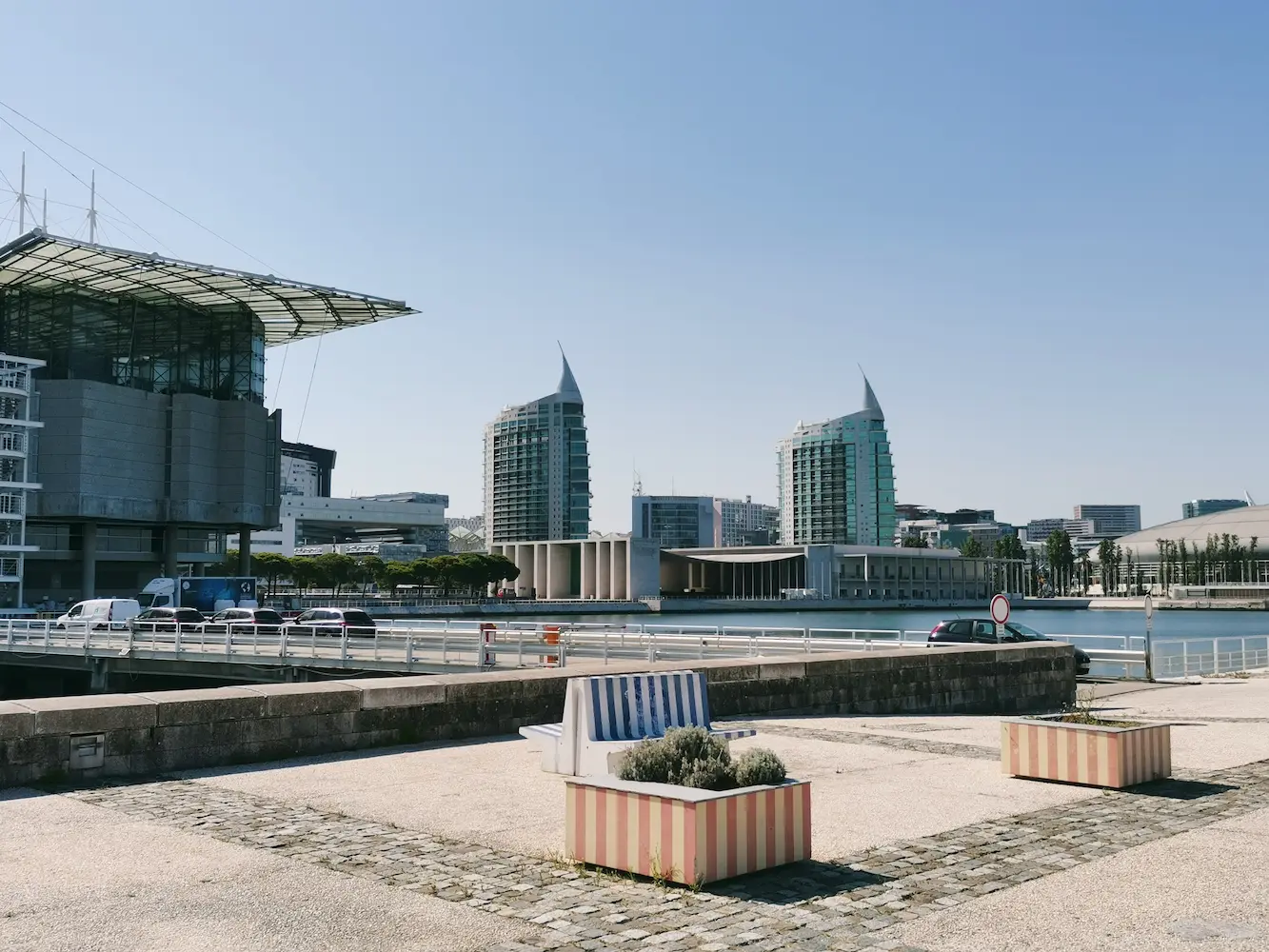
The result is what visitors see today: a vibrant riverside district filled with contemporary architecture, cultural venues, green spaces, restaurants, shopping centers, public art, and some of the best waterfront promenades in Portugal.
More than two decades later, Parque das Nações remains one of Lisbon’s most ambitious success stories.
Located in eastern Lisbon along the Tagus River, Parque das Nações sits between Lisbon Airport and the historic city center.
One of its greatest advantages is accessibility.
The neighborhood is connected by:
Visitors arriving at Lisbon Airport can often reach Parque das Nações faster than they can reach many central neighborhoods.
This convenience has helped transform the district into an important business hub, conference destination, and preferred location for international events.
Lisbon is famously charming.
It’s also famously chaotic.
Steep hills. Narrow streets. Unexpected staircases. Trams squeezing through spaces that seem mathematically impossible.
Parque das Nações decided to skip all that.
Instead, the neighborhood embraces openness.
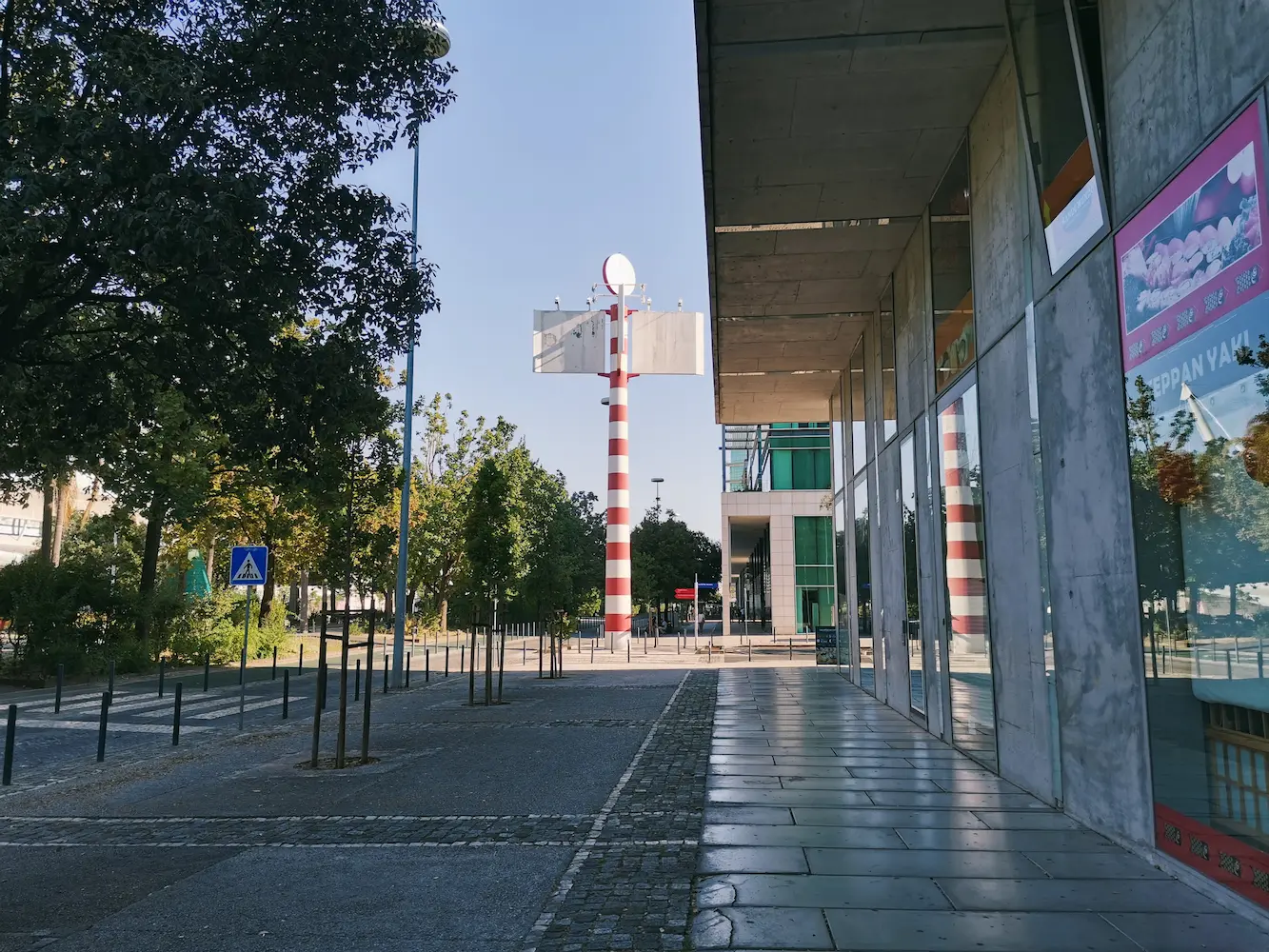
The streets are wider.
The sidewalks invite walking rather than endurance testing.
Cyclists exist without appearing to be participants in a survival reality show.
Families push strollers without consulting topographic maps.
The atmosphere feels closer to Copenhagen, Rotterdam, or parts of Barcelona than to traditional Lisbon.
Some travelers love it.
Some miss the old-world charm.
Most end up appreciating the contrast.
After spending days navigating the labyrinth of Alfama, many visitors discover that Parque das Nações feels like taking a deep breath.
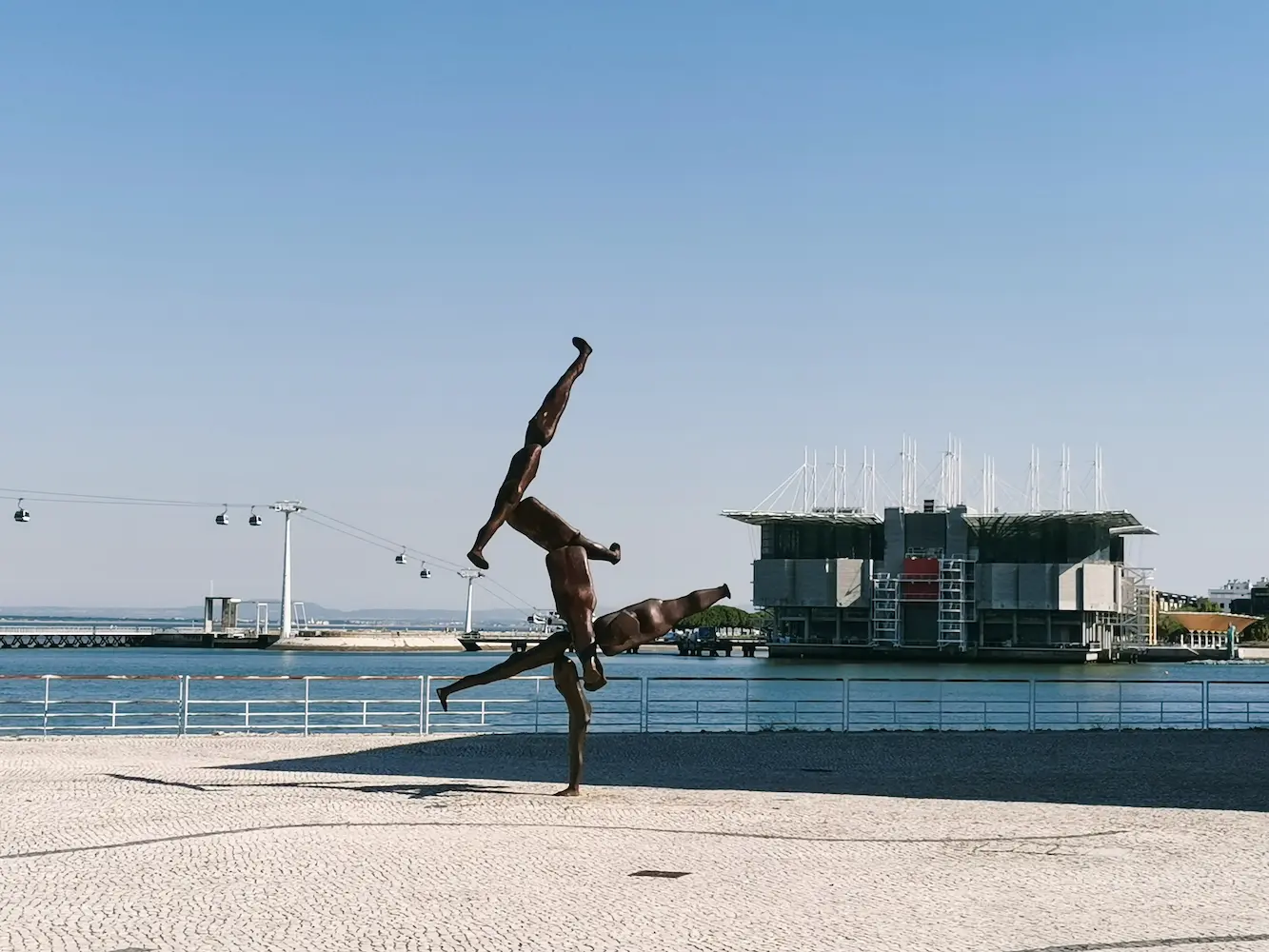
If Parque das Nações has a superstar, it’s undoubtedly the Oceanário de Lisboa.
Consistently ranked among Europe’s best aquariums, the Oceanário attracts visitors from around the world.
And unlike many famous attractions, it genuinely lives up to expectations.
The concept is beautifully simple.
At the center stands an enormous tank representing the global ocean. Around it, carefully designed habitats recreate different marine ecosystems from around the world.
As visitors move through the building, perspectives constantly change.
One moment you’re watching sharks glide through the water.
The next you’re staring at sunfish that look like they were designed by an artist who received very confusing instructions.
Then suddenly an otter appears and steals the show.
Again.
The Oceanário isn’t just an attraction for children.
Adults routinely spend hours here, mesmerized by marine life and the thoughtful design of the exhibits.
If you’re visiting Lisbon with family, it belongs near the top of your itinerary.
One of the greatest pleasures in Parque das Nações costs absolutely nothing.
Walking.
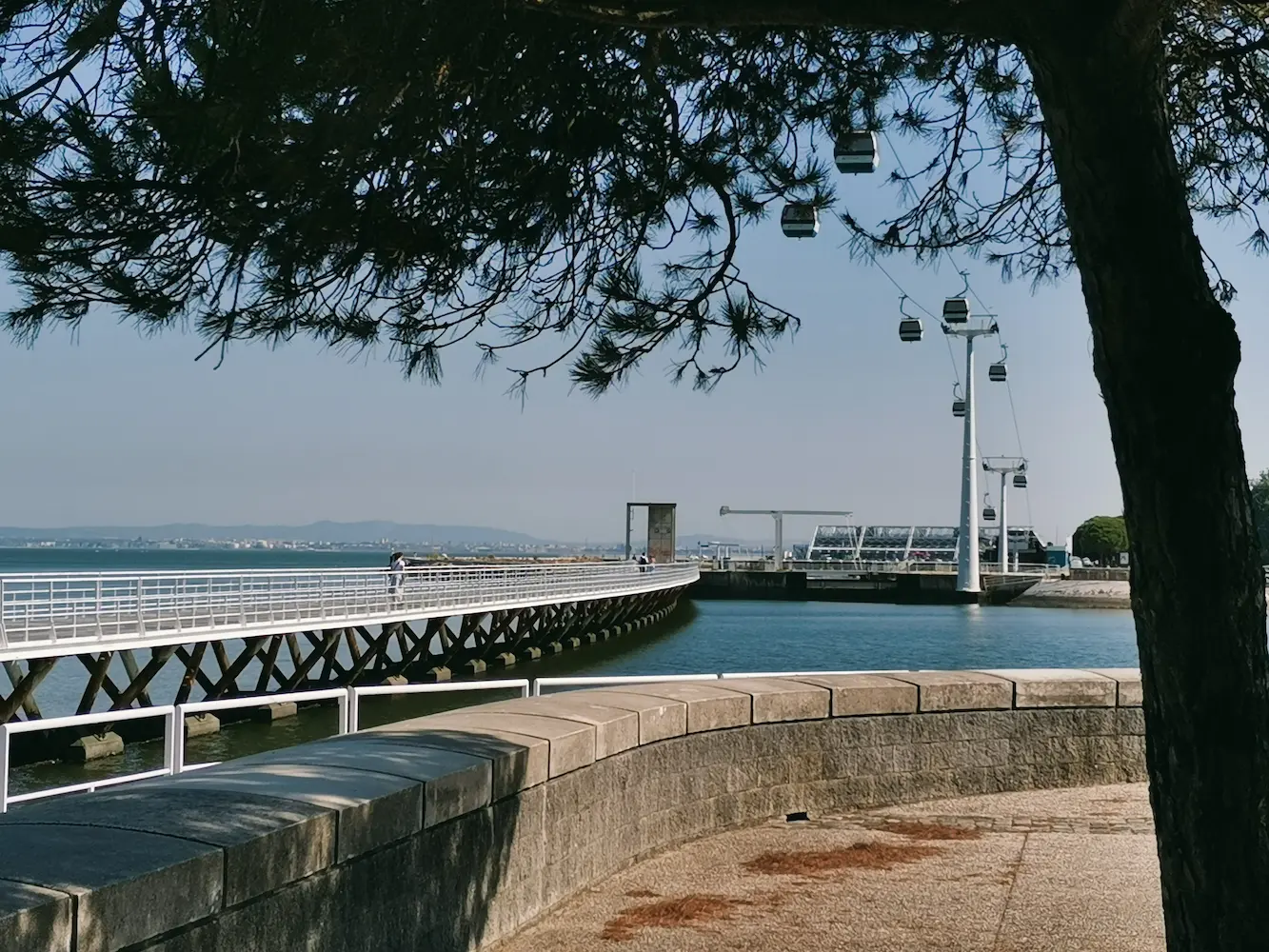
The neighborhood’s riverfront promenade stretches for kilometers, offering uninterrupted views across the Tagus estuary.
Unlike many waterfront developments that feel commercialized, this one manages to remain genuinely enjoyable.
You’ll find:
The river becomes the neighborhood’s main character.
Everything seems oriented toward it.
Restaurants face it.
Parks embrace it.
Public art frames it.
Even the architecture appears designed to acknowledge its presence.
Sunrise and sunset are particularly spectacular.
Sometimes cities reveal themselves from above.
Parque das Nações certainly does.
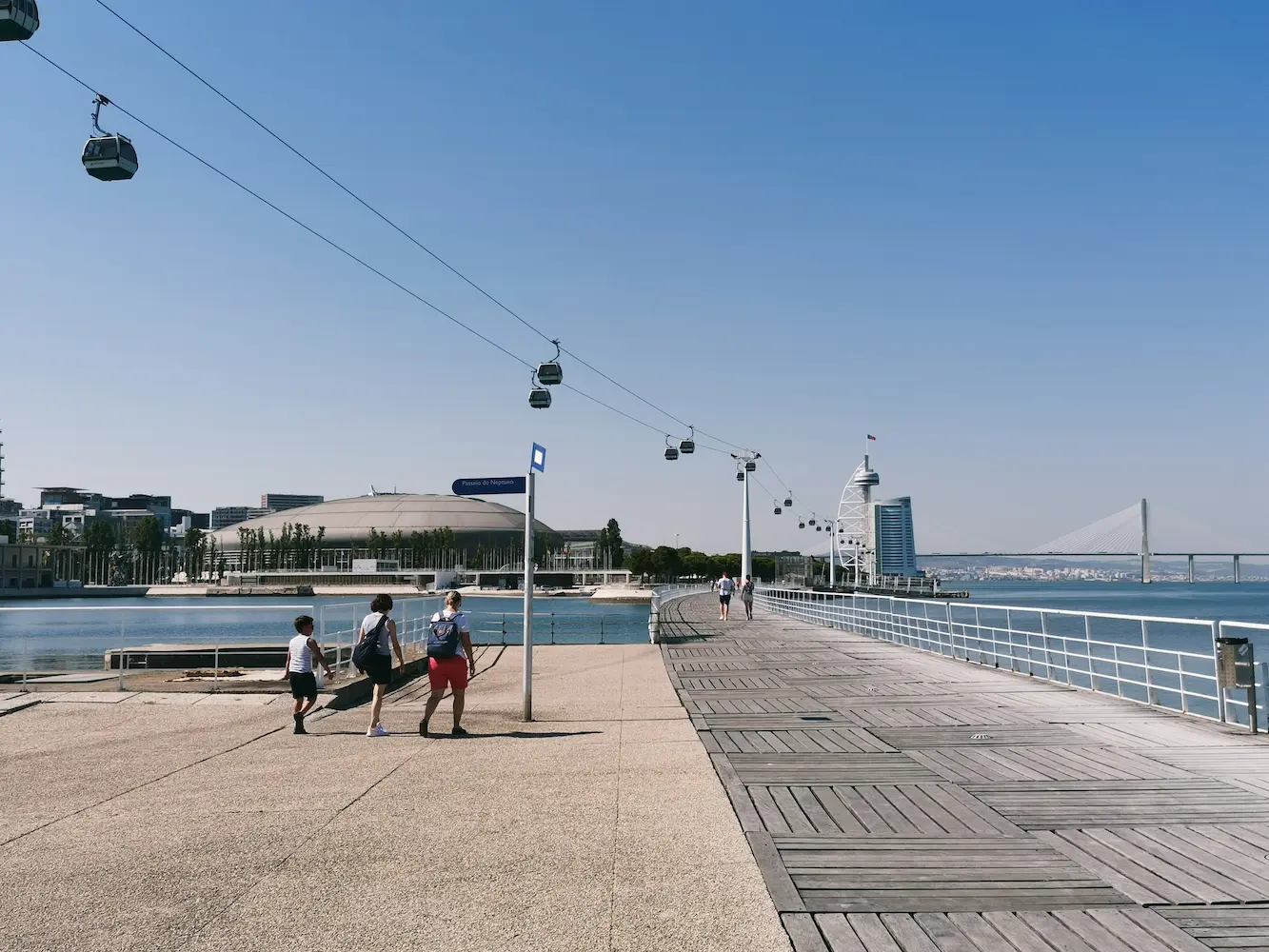
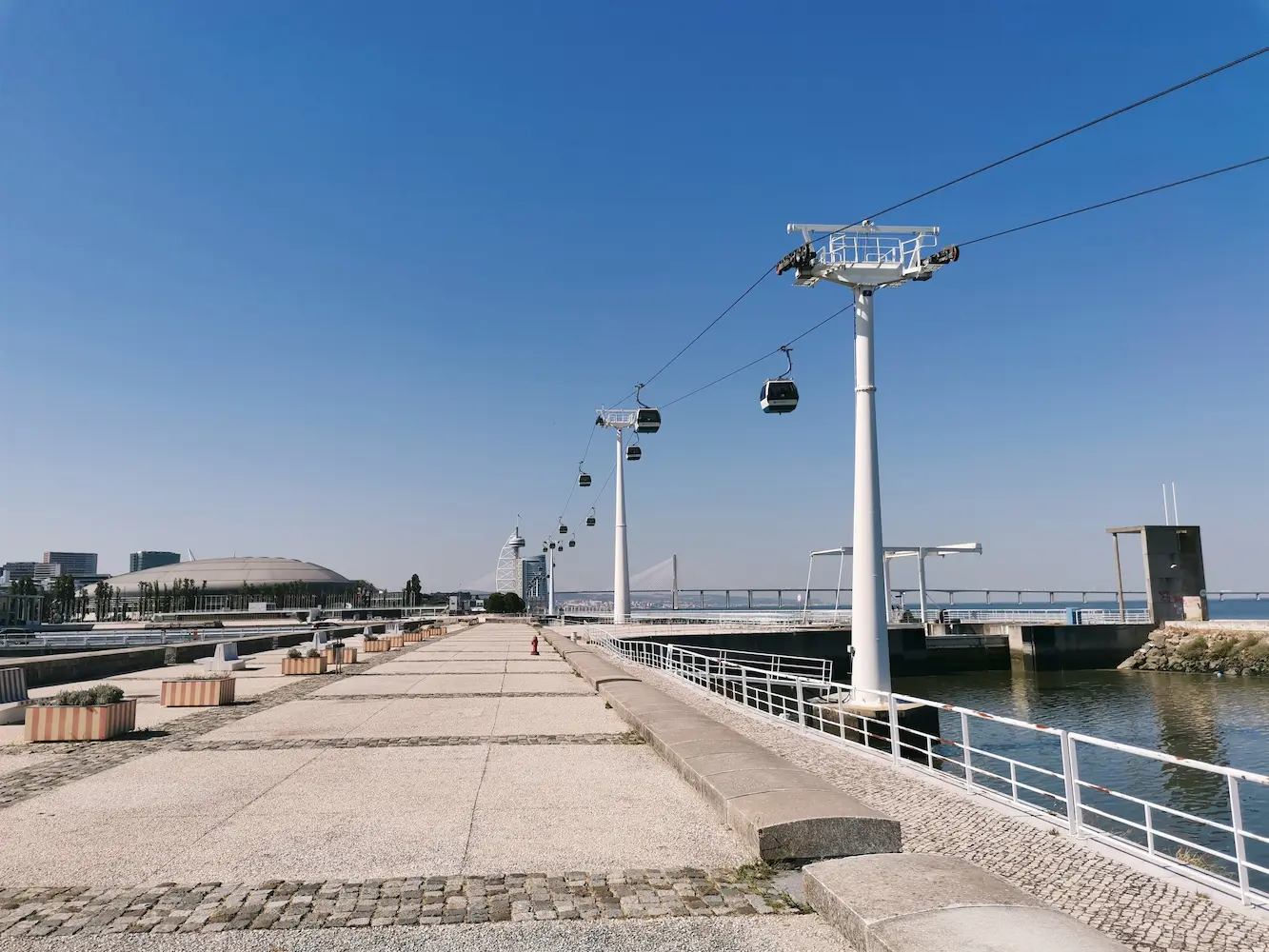
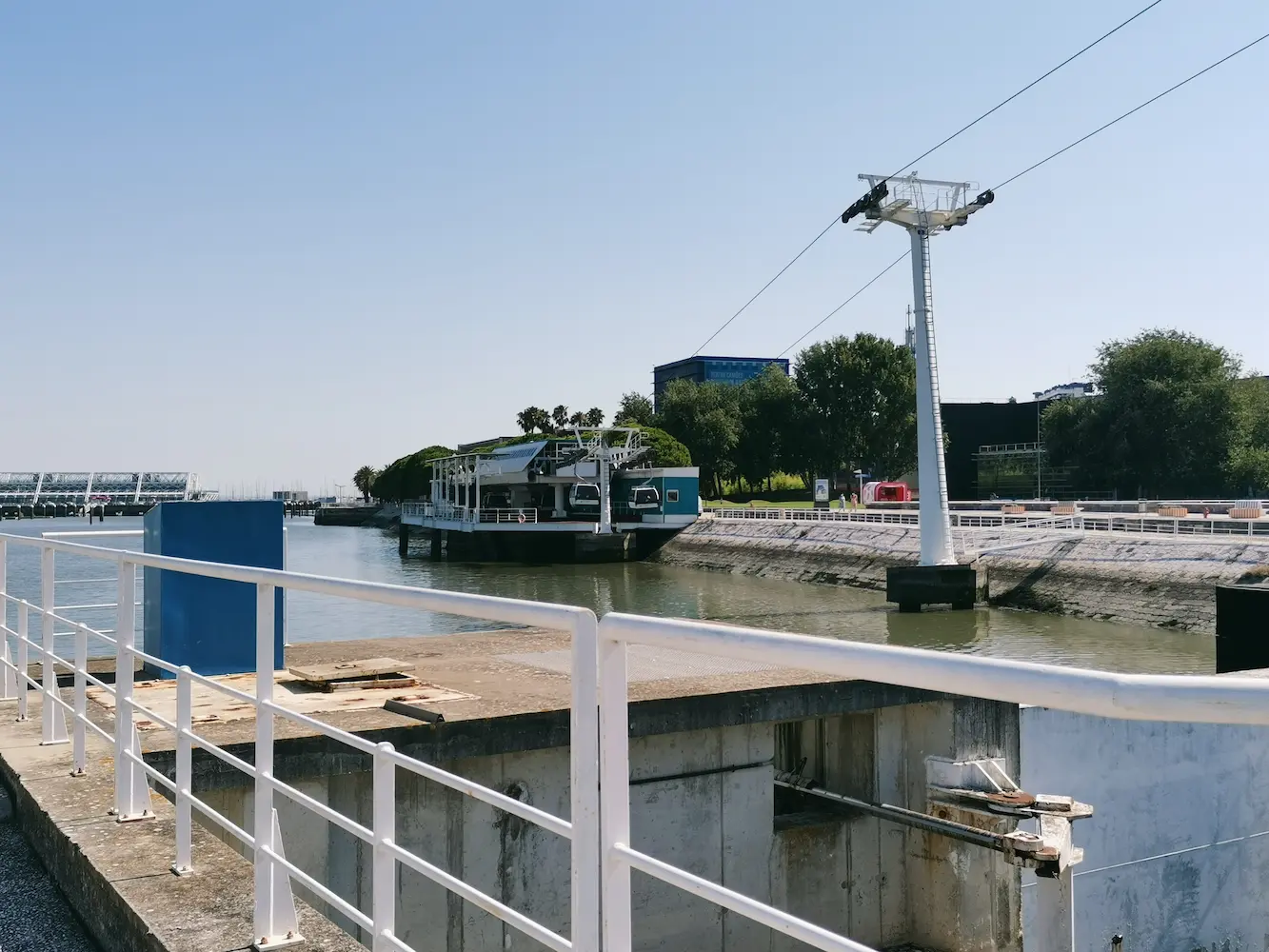
The Telecabine Lisboa glides along the waterfront, connecting key attractions while providing panoramic views of the district.
The journey is short but memorable.
From the cable car, visitors can appreciate the scale of the redevelopment project, observe the geometry of the modern architecture, and admire the Tagus stretching toward the horizon.
Photography enthusiasts particularly enjoy this experience because it offers perspectives impossible to capture from ground level.
On clear days, the views extend remarkably far.
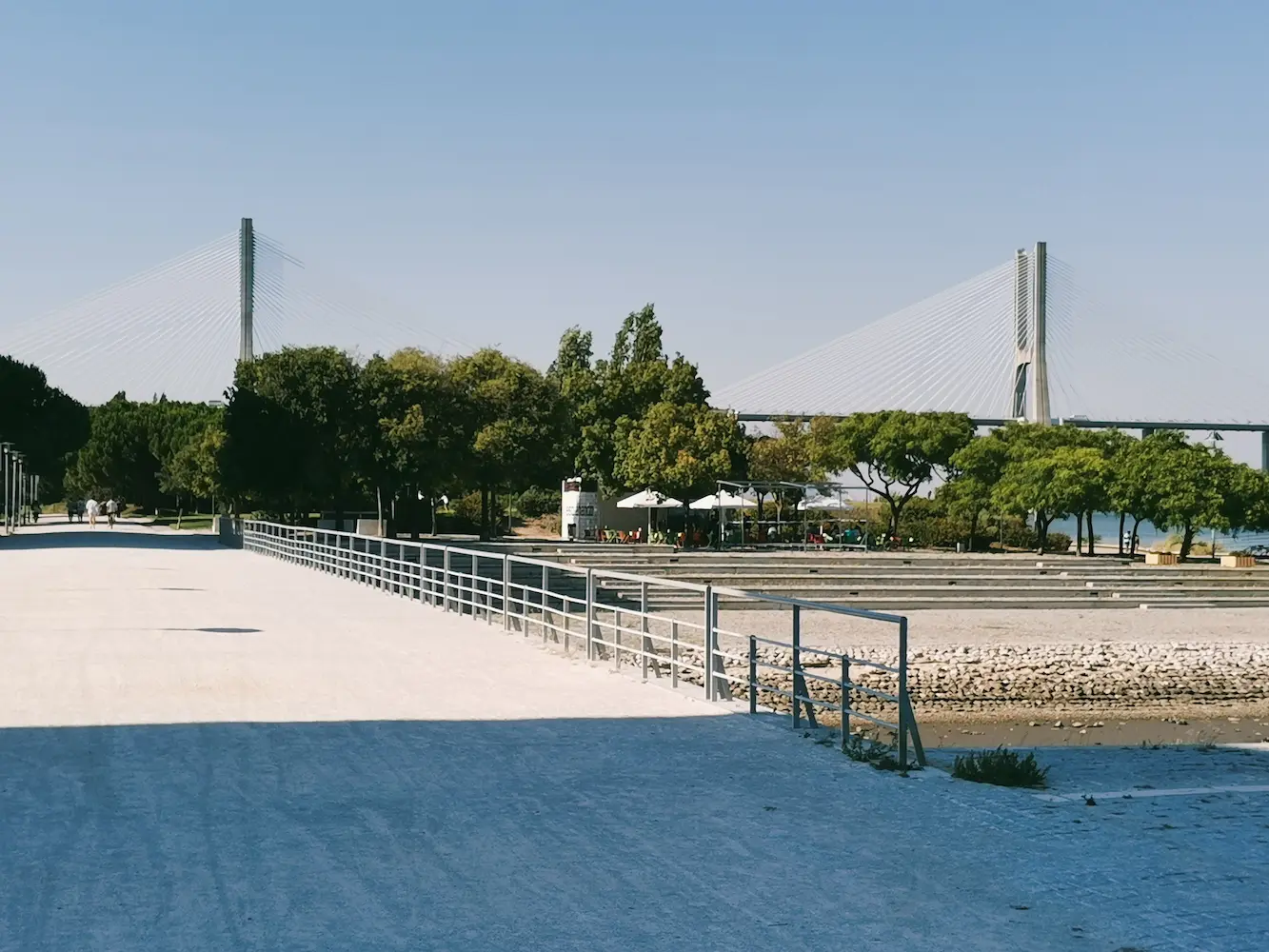
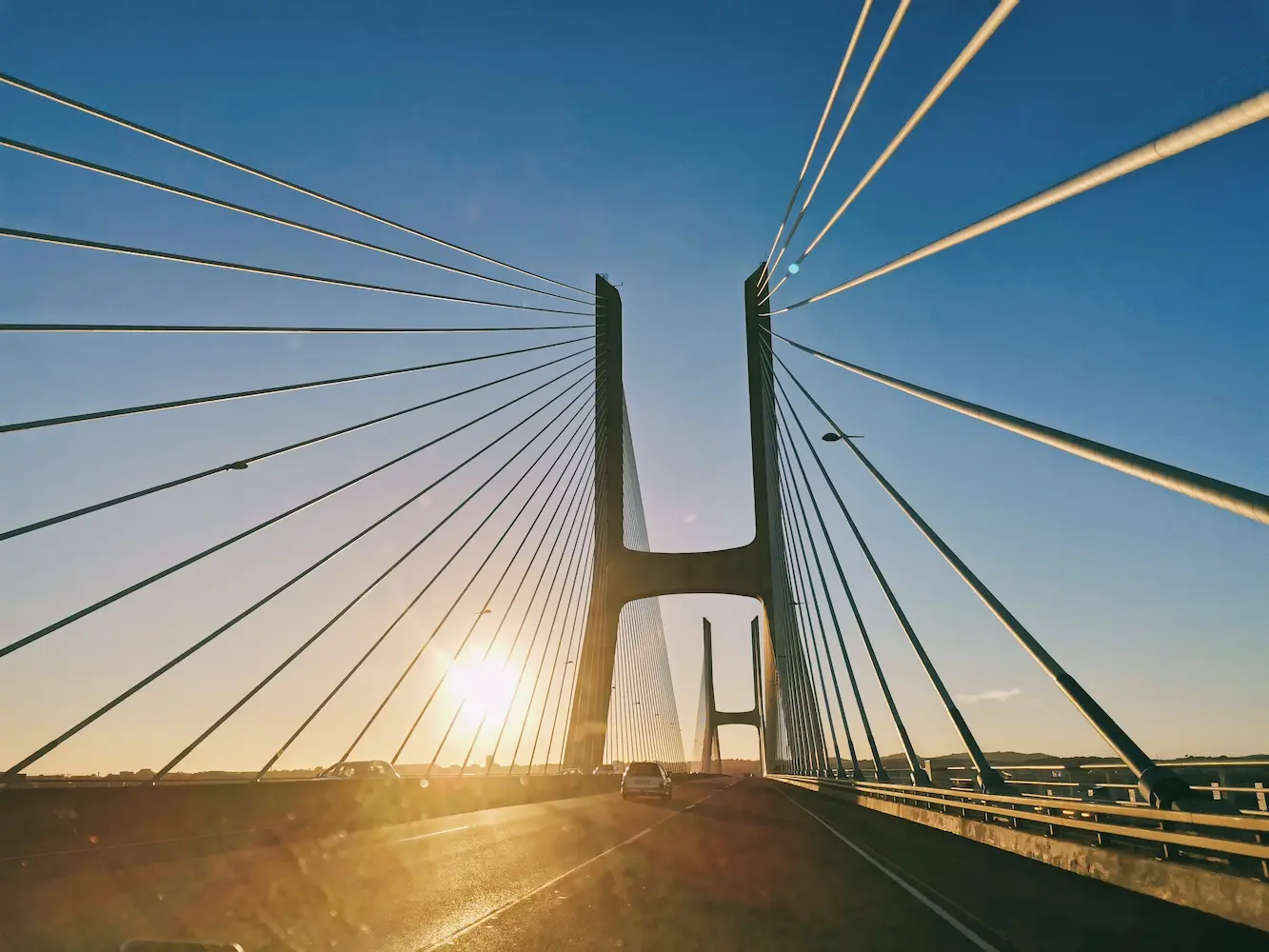
The Vasco da Gama Bridge dominates the eastern skyline.
Stretching more than 17 kilometers, it is among the longest bridges in Europe.
From Parque das Nações, the structure becomes part of the landscape.
Its elegant lines seem to disappear into the distance, creating one of Lisbon’s most recognizable modern panoramas.
Many visitors spend their first day photographing it.
Residents spend years quietly appreciating it.
Both reactions are understandable.
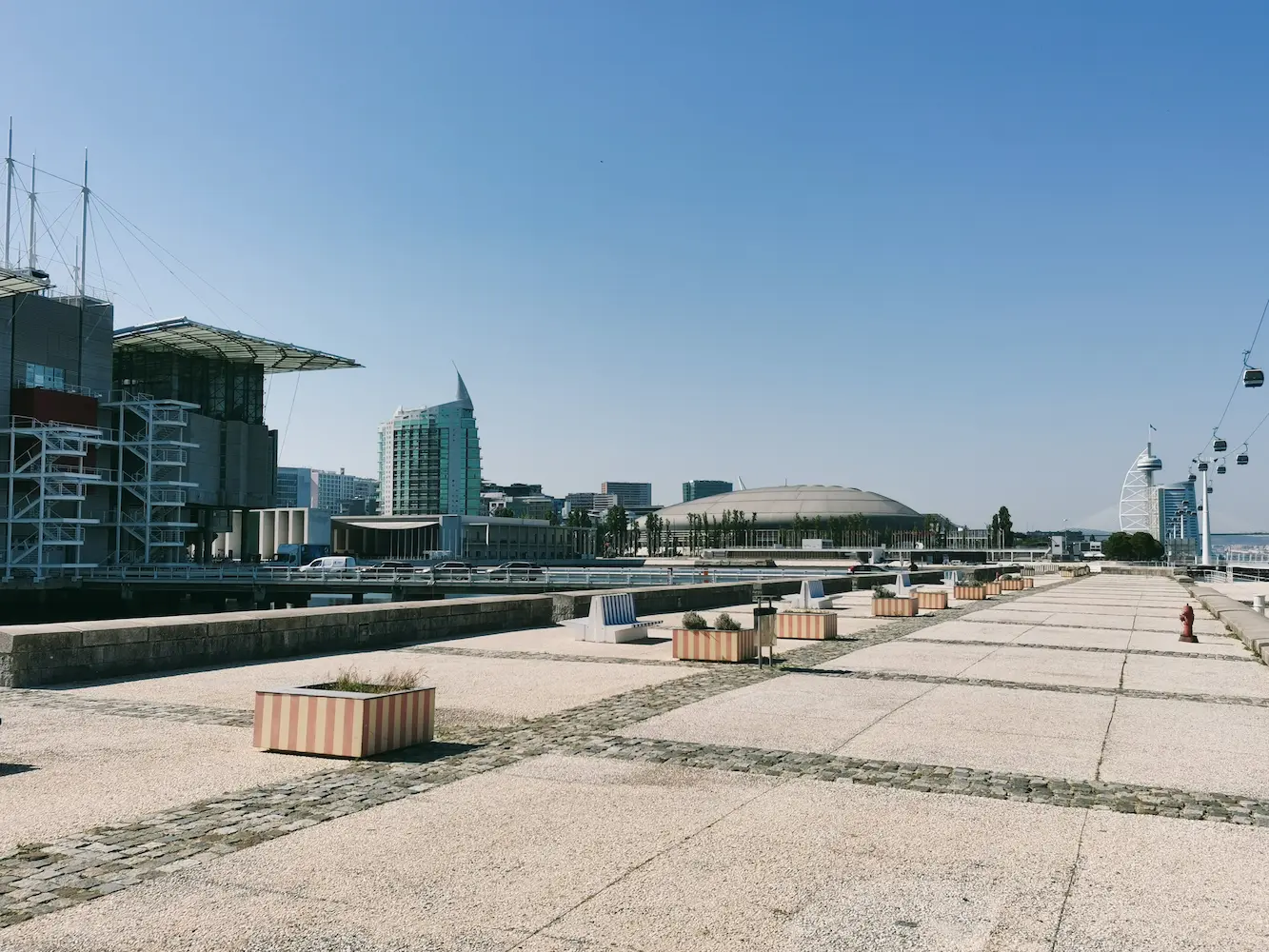
Parque das Nações is also Lisbon’s entertainment powerhouse.
The MEO Arena regularly hosts:
When global artists come to Portugal, there’s a good chance they’ll perform here.
The arena’s presence helps keep the neighborhood active year-round.
Even on evenings when you don’t have tickets, the surrounding area often buzzes with energy as thousands of people arrive for events.
Every year, Parque das Nações becomes the temporary capital of the technology world.
Web Summit brings entrepreneurs, startups, investors, journalists, developers, and innovators from across the globe.
Coffee lines suddenly contain founders discussing fundraising rounds.
Hotel lobbies become networking spaces.
Restaurants transform into unofficial meeting rooms.
The entire neighborhood takes on an international atmosphere.
For digital nomads and startup founders, this annual transformation reinforces Parque das Nações’ reputation as Lisbon’s most globally connected district.
Absolutely.
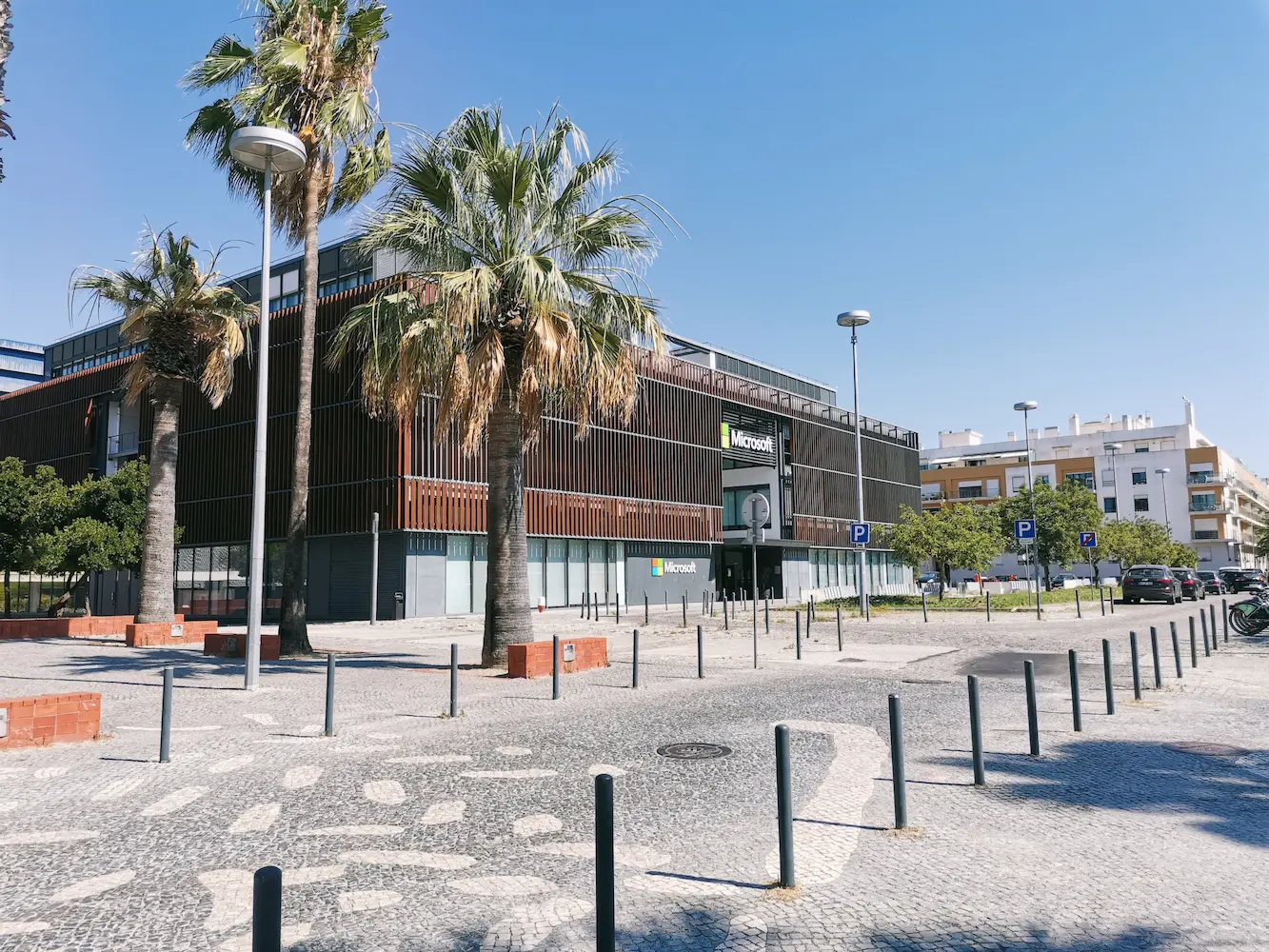
In fact, it may be one of the most underrated digital nomad areas in Lisbon.
While many remote workers focus on neighborhoods like Cais do Sodré, Santos, or Alcântara, Parque das Nações offers advantages that become increasingly attractive over longer stays.
These include:
It lacks some of the historic charm found elsewhere in Lisbon.
But when you’re trying to balance productivity and quality of life, practicality often wins.
And Parque das Nações is exceptionally practical.
The dining scene reflects the neighborhood itself.
Modern, international, diverse.
Visitors will find:
Many establishments enjoy river views, particularly along the waterfront promenade.
The nearby Vasco da Gama shopping center also provides numerous dining choices for travelers seeking convenience.
Food lovers shouldn’t expect the hidden century-old taverns of Alfama.
That’s not the neighborhood’s personality.
Parque das Nações prefers contemporary comfort over nostalgic romance.
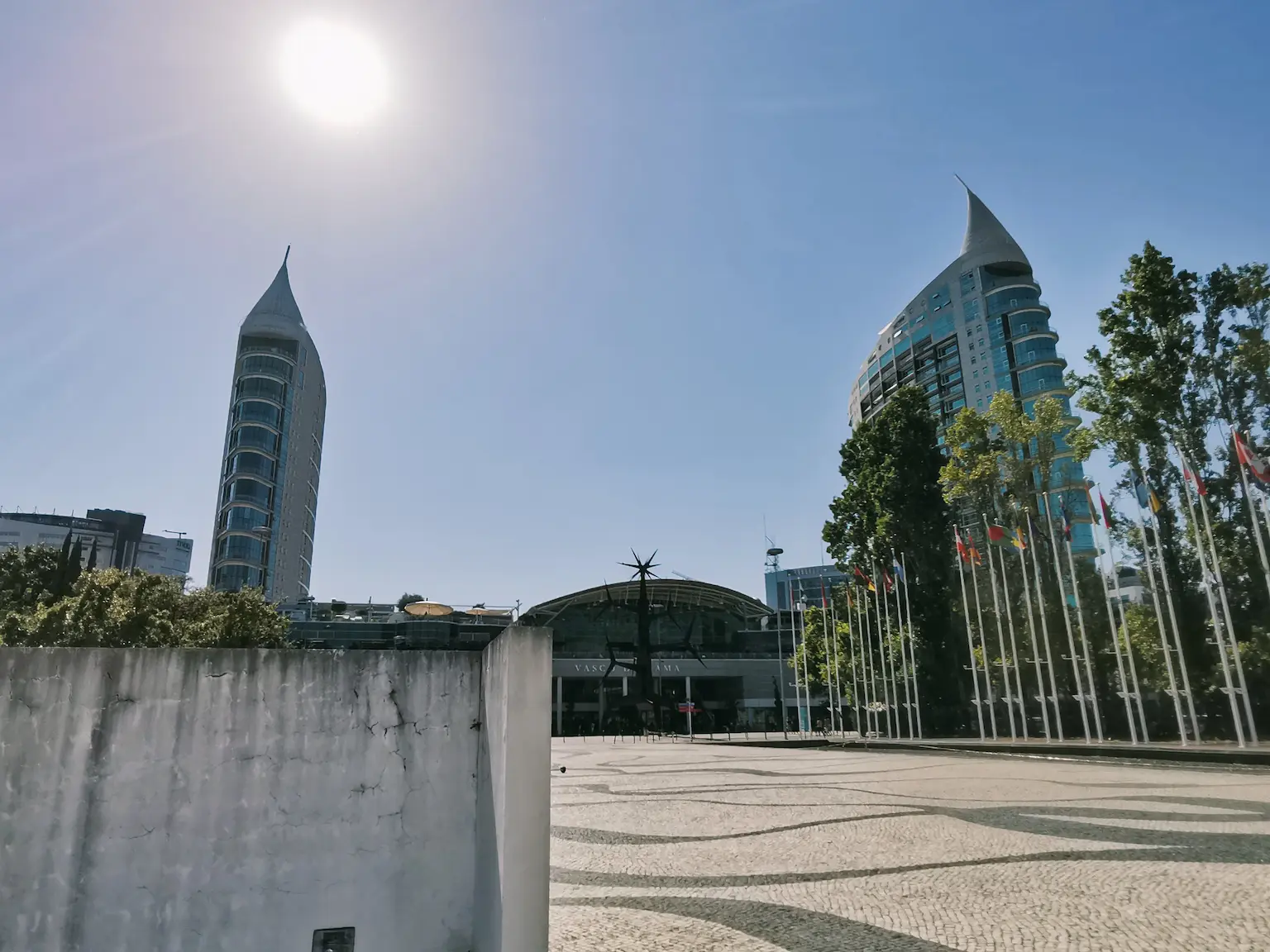
The Vasco da Gama shopping center serves as one of Lisbon’s major retail destinations.
Beyond shopping, it functions as a social hub.
Residents come here for:
For visitors staying in the neighborhood, it provides nearly everything needed within walking distance.
Families often discover that Parque das Nações is among Lisbon’s easiest neighborhoods to navigate.
Wide pedestrian areas, open spaces, attractions, and playgrounds create an environment that feels welcoming for children.
Popular family activities include:
Parents quickly learn that children appreciate space.
Parque das Nações provides plenty of it.
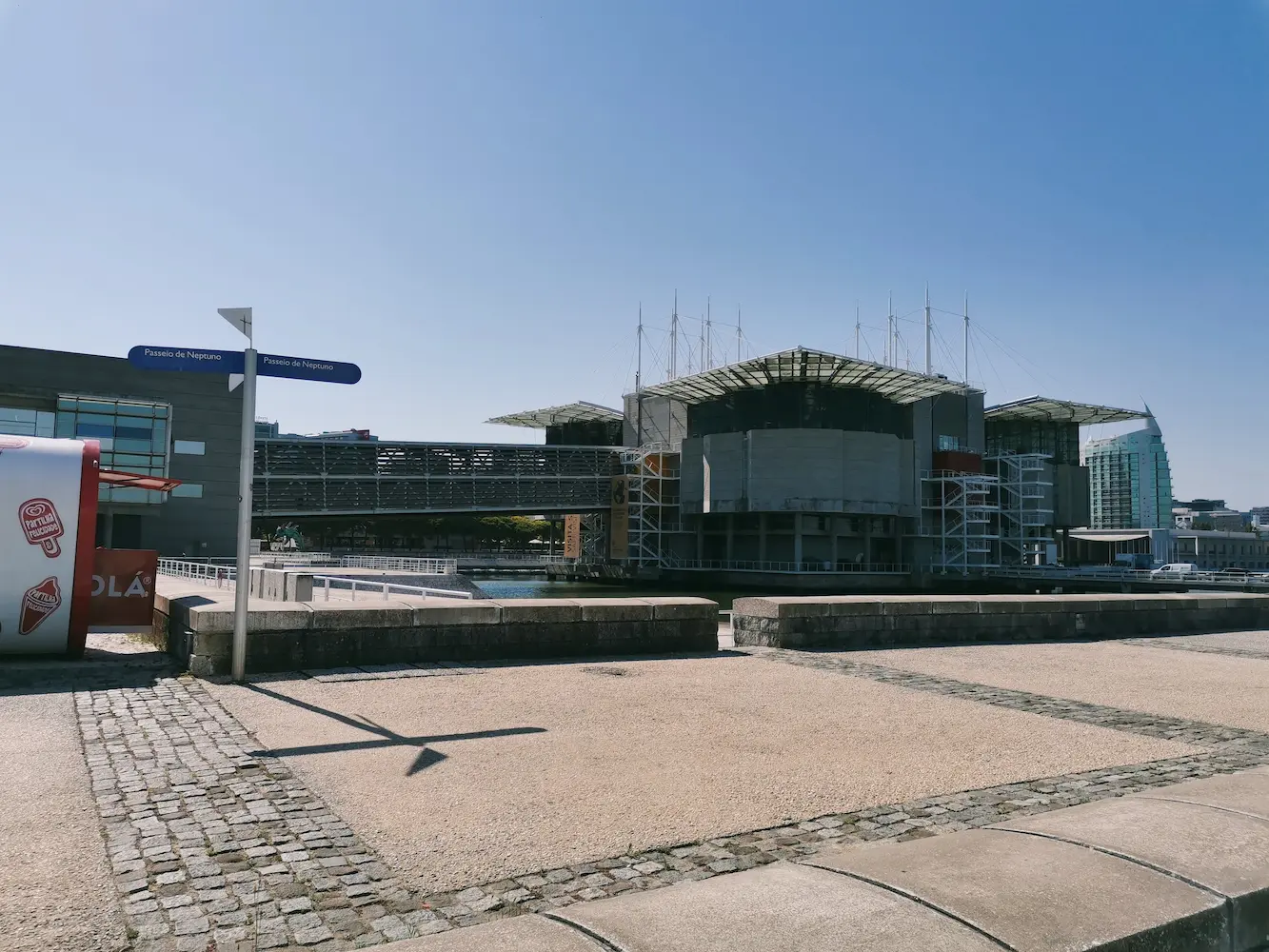
Many Lisbon residents consider Parque das Nações one of the city’s most desirable residential areas.
The reasons are straightforward.
The neighborhood offers:
Property prices reflect this popularity.
The district consistently ranks among Lisbon’s premium residential markets.
Still, for many residents, the quality of life justifies the cost.
The neighborhood works year-round.
Spring brings comfortable temperatures and blooming parks.
Summer fills the waterfront with activity.
Autumn offers pleasant weather and fewer crowds.
Winter remains relatively mild compared to much of Europe.
Unlike some Lisbon attractions that become crowded during peak tourist season, Parque das Nações generally retains a sense of openness even during busy periods.
That spaciousness is part of its appeal.